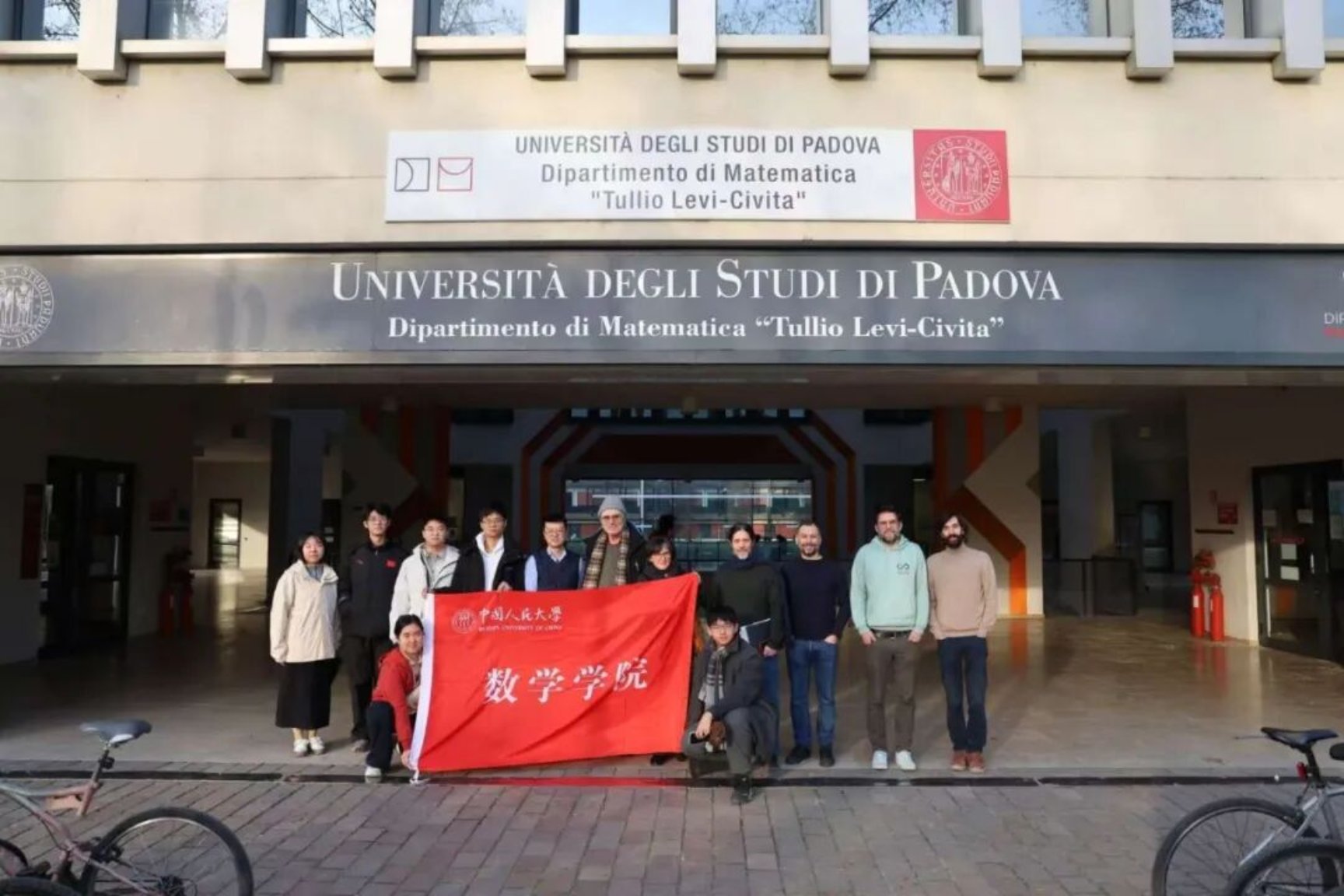
Supported by the alumni-funded Future Computing Elite Program, a delegation from the School of Mathematics at Renmin University of China visited the Department of Mathematics at Università degli Studi di Padova for an academic exchange from January 19 to 31. Led by Associate Dean Wang Shanwen and Youth League Secretary Aitina, the group included five undergraduate, master’s, and doctoral students from the “Kuande Mathematics+” program. Focused on advancing mathematical research and exchange, the visit broadened participants’ international perspectives, strengthened institutional ties between the two universities, and injected fresh momentum into globally oriented talent development, while laying a solid foundation for sustained future collaboration in mathematical education and research.
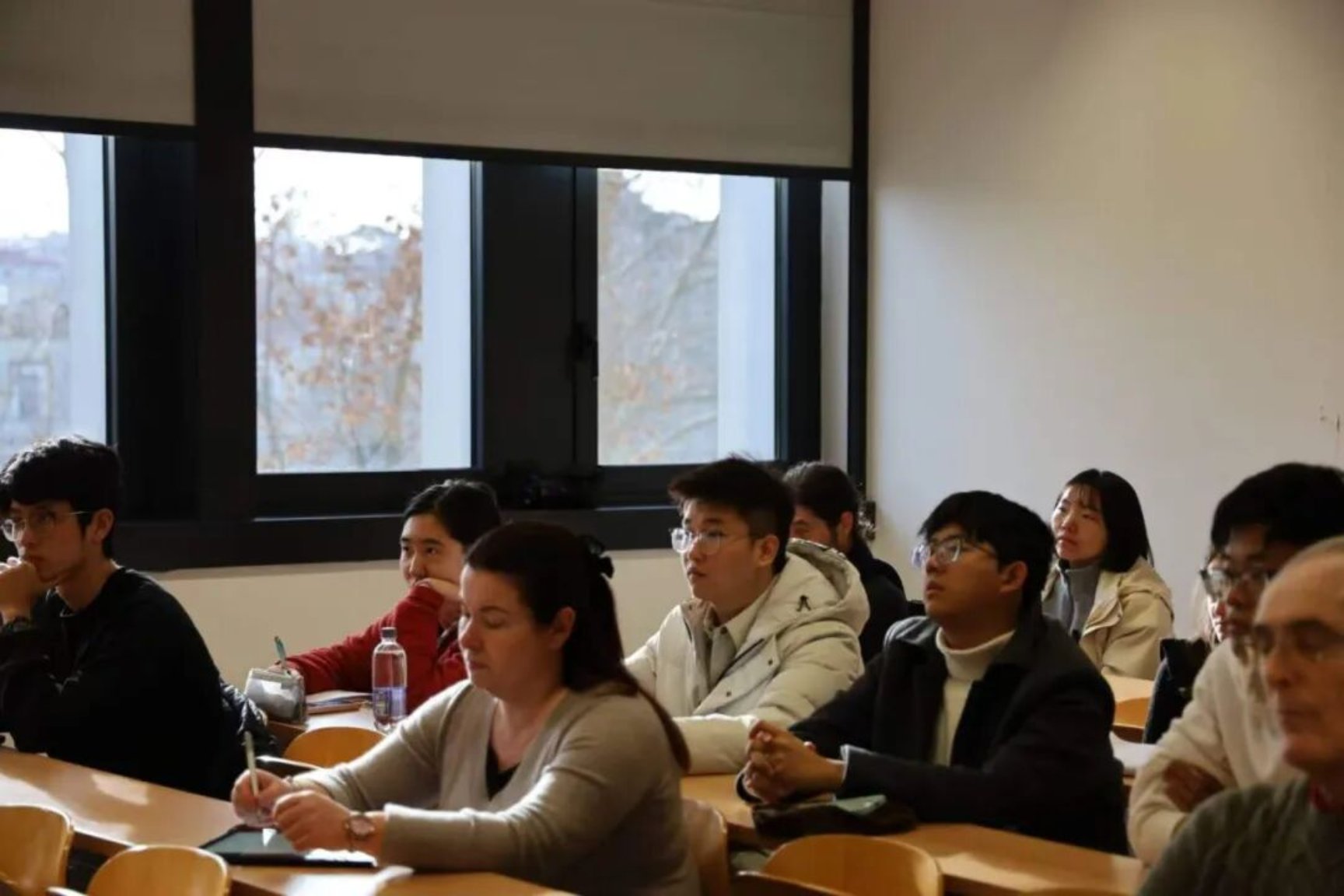
As one of the oldest universities in Europe, the University of Padua has a long and influential tradition in mathematics, with particular strength in number theory, algebraic geometry, arithmetic geometry, and related fields. During the visit, the Department of Mathematics organized a series of lectures, seminars, and research presentations, giving students first-hand exposure to the contemporary international research environment and opportunities to engage directly with current mathematical work. These activities allowed participants to experience a different academic culture while further developing their research awareness and disciplinary perspective.
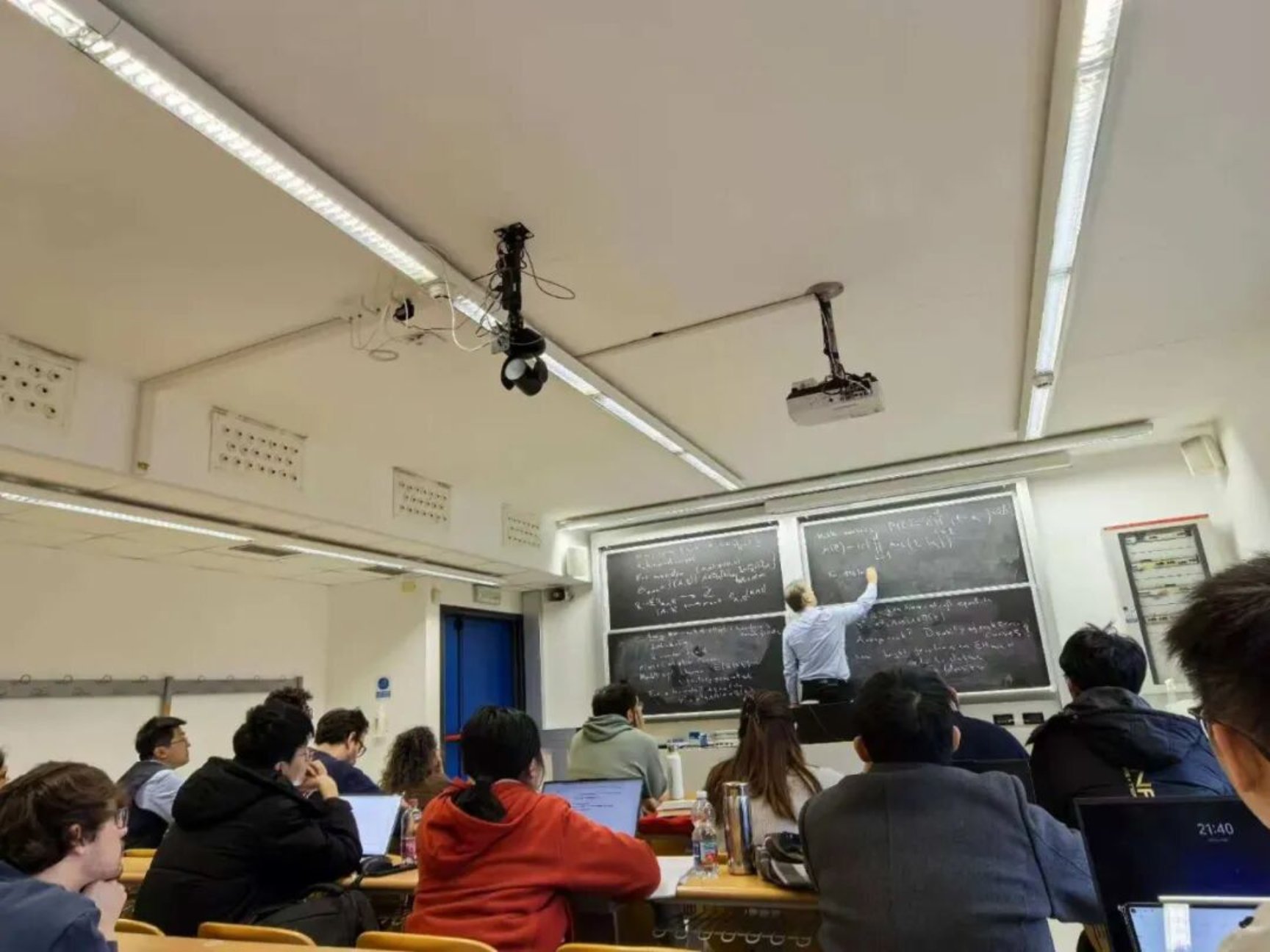
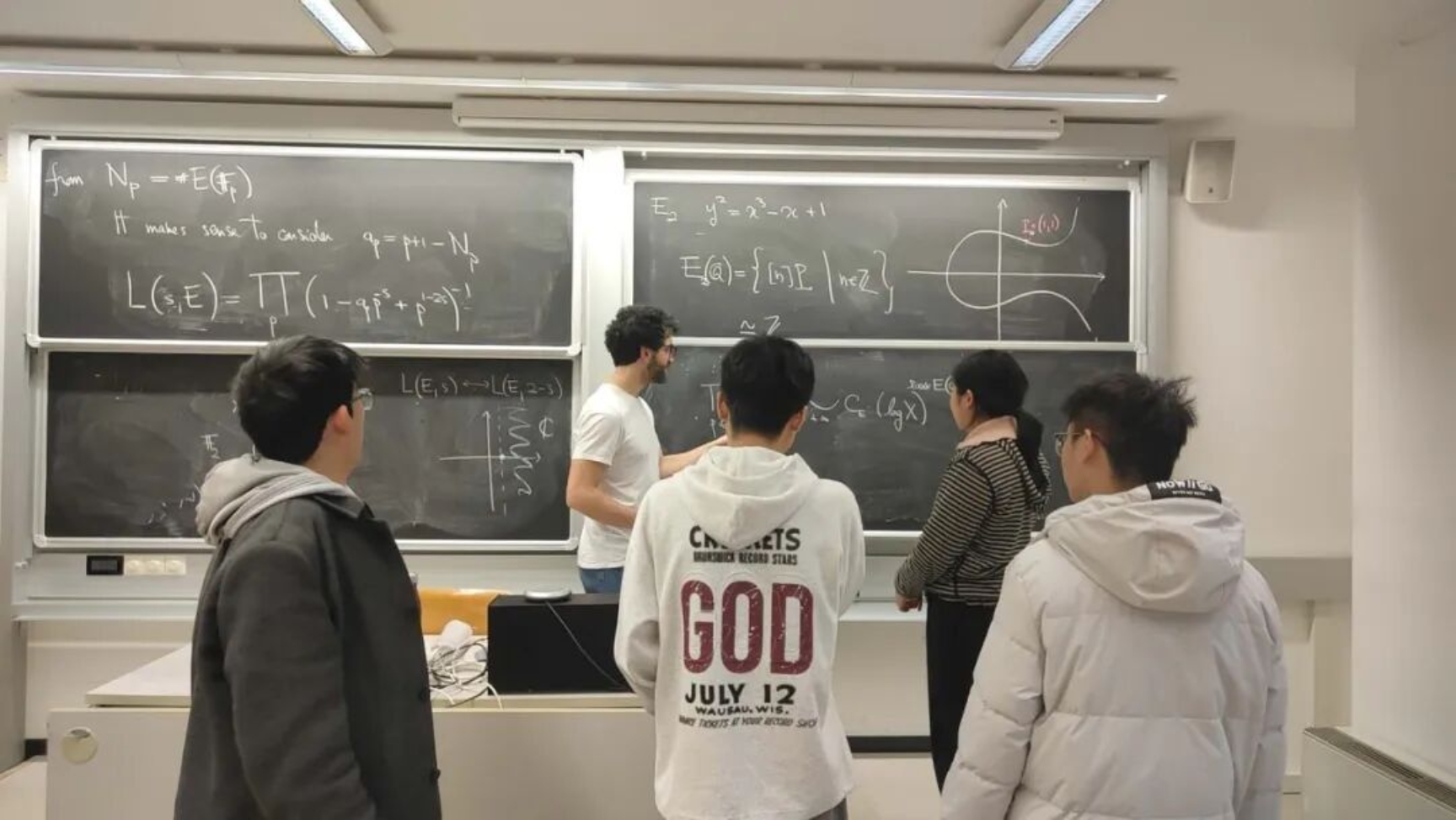
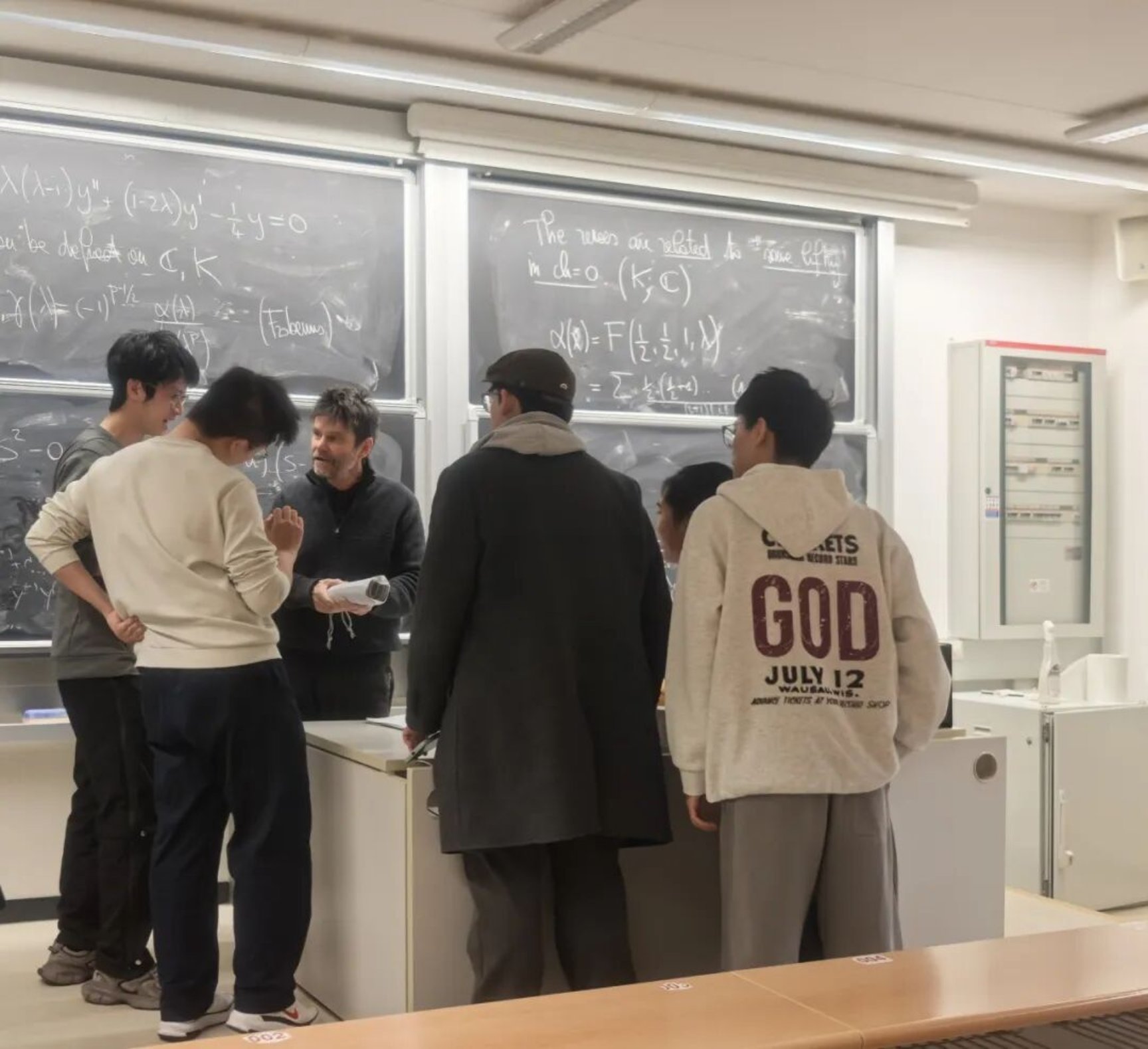
Throughout the program, students attended a number of advanced research talks in areas such as number theory and arithmetic geometry. Topics ranged from the average rank problem for elliptic curves and recent progress on the Bloch–Kato conjecture to theoretical developments in p-adic differential equations. The speakers presented both the conceptual frameworks of their respective fields and the latest research developments with clarity and depth. For the visiting students, these talks offered a valuable opportunity to move beyond textbook knowledge and individual research interests, and to gain a broader view of current questions and challenges in contemporary mathematical research.
Among the highlights, Professor Kloosterman’s lecture on the average rank of elliptic surfaces skillfully integrated geometric and arithmetic-statistical ideas, demonstrating the unique appeal of cross-disciplinary research. Professor Fornea’s in-depth exploration of the Bloch–Kato conjecture showcased the frontiers of modern number theory, giving students a clearer understanding of the conjecture’s significance and research trajectory. Professor Chiarellotto’s presentation on p-adic differential equations carefully unpacked the profound applications of analytic tools in arithmetic geometry, lifting the veil on this “mysterious” field and deepening students’ appreciation of the intrinsic connections and integrative trends among different branches of mathematics.
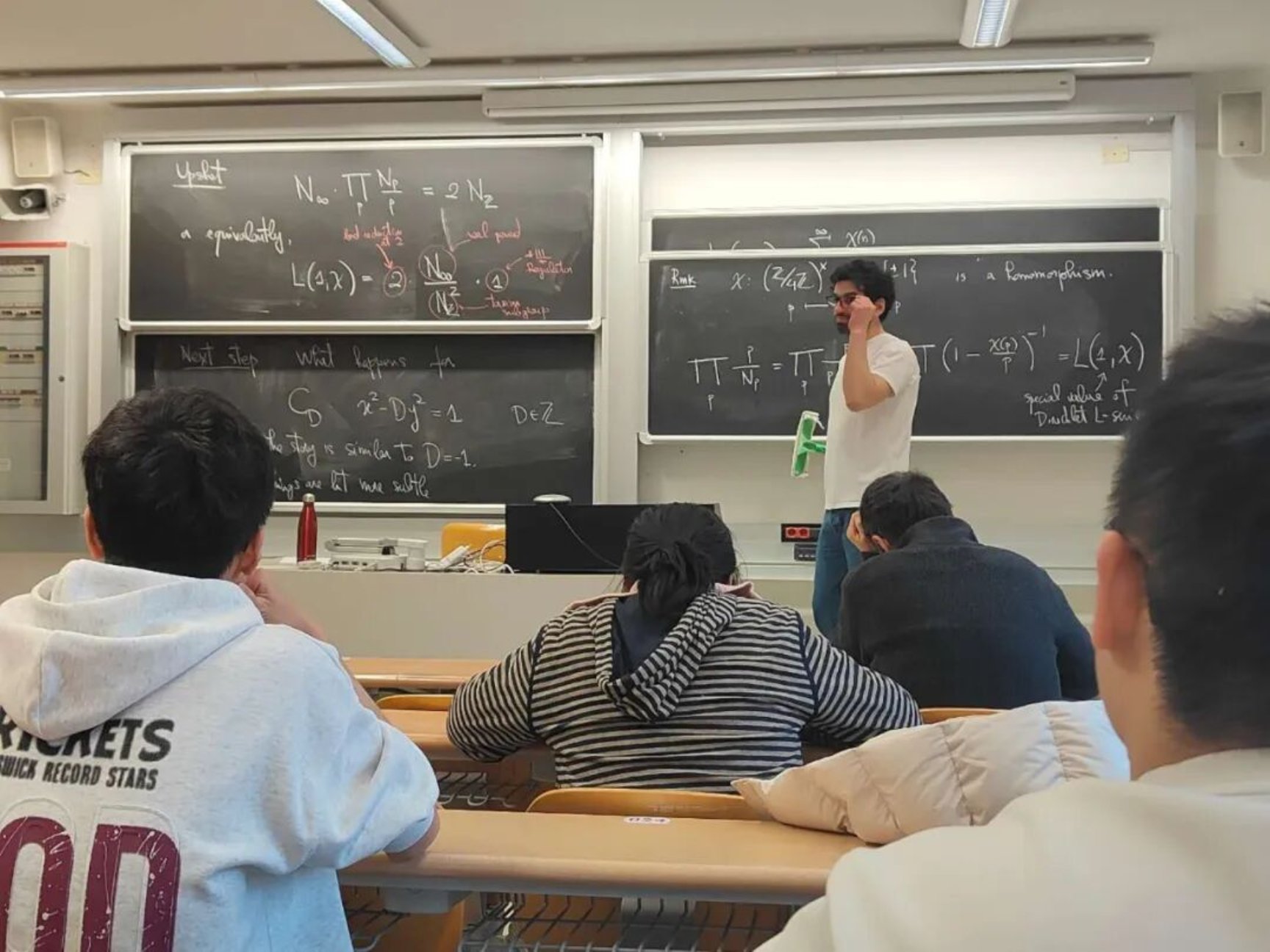
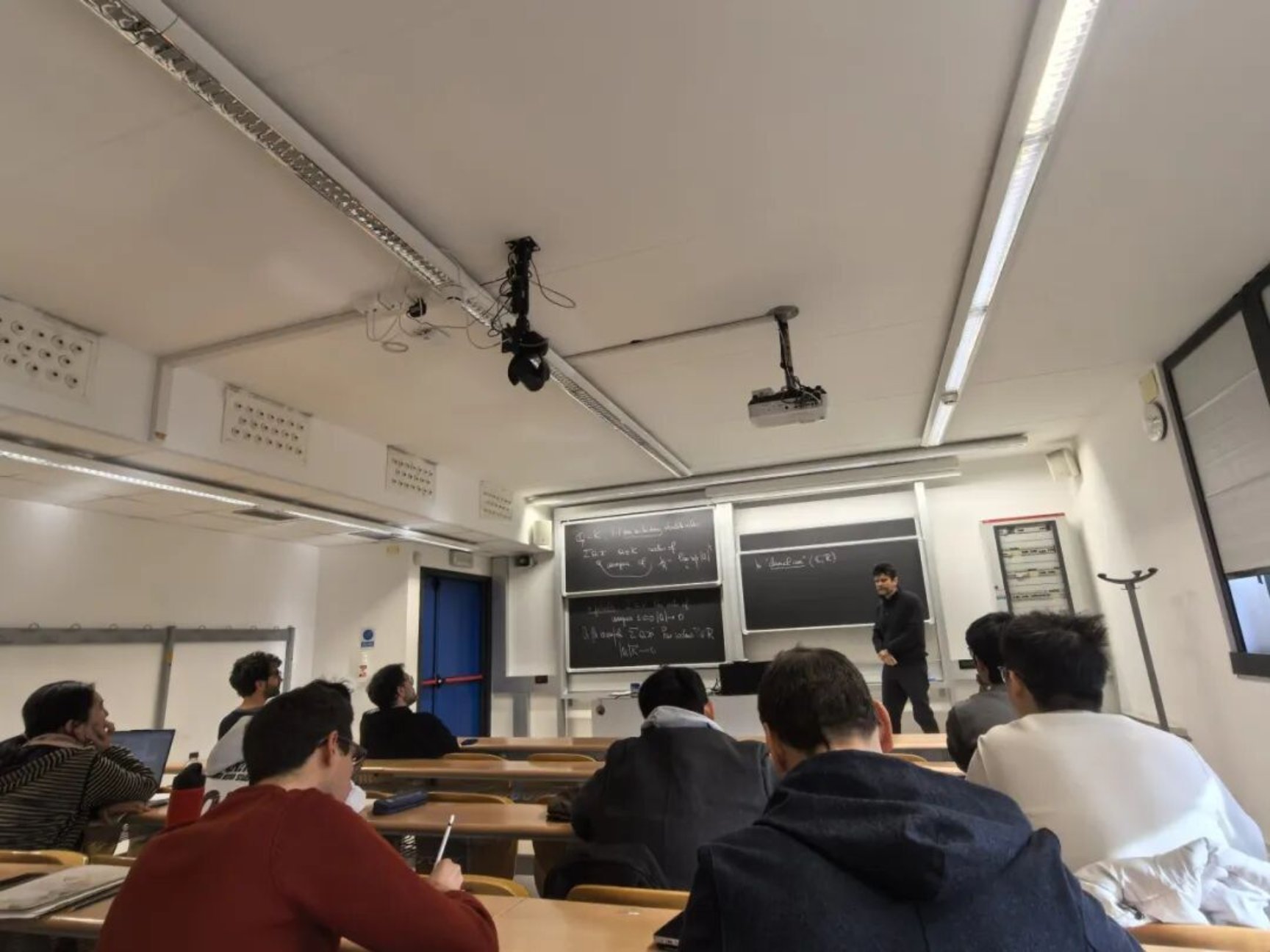
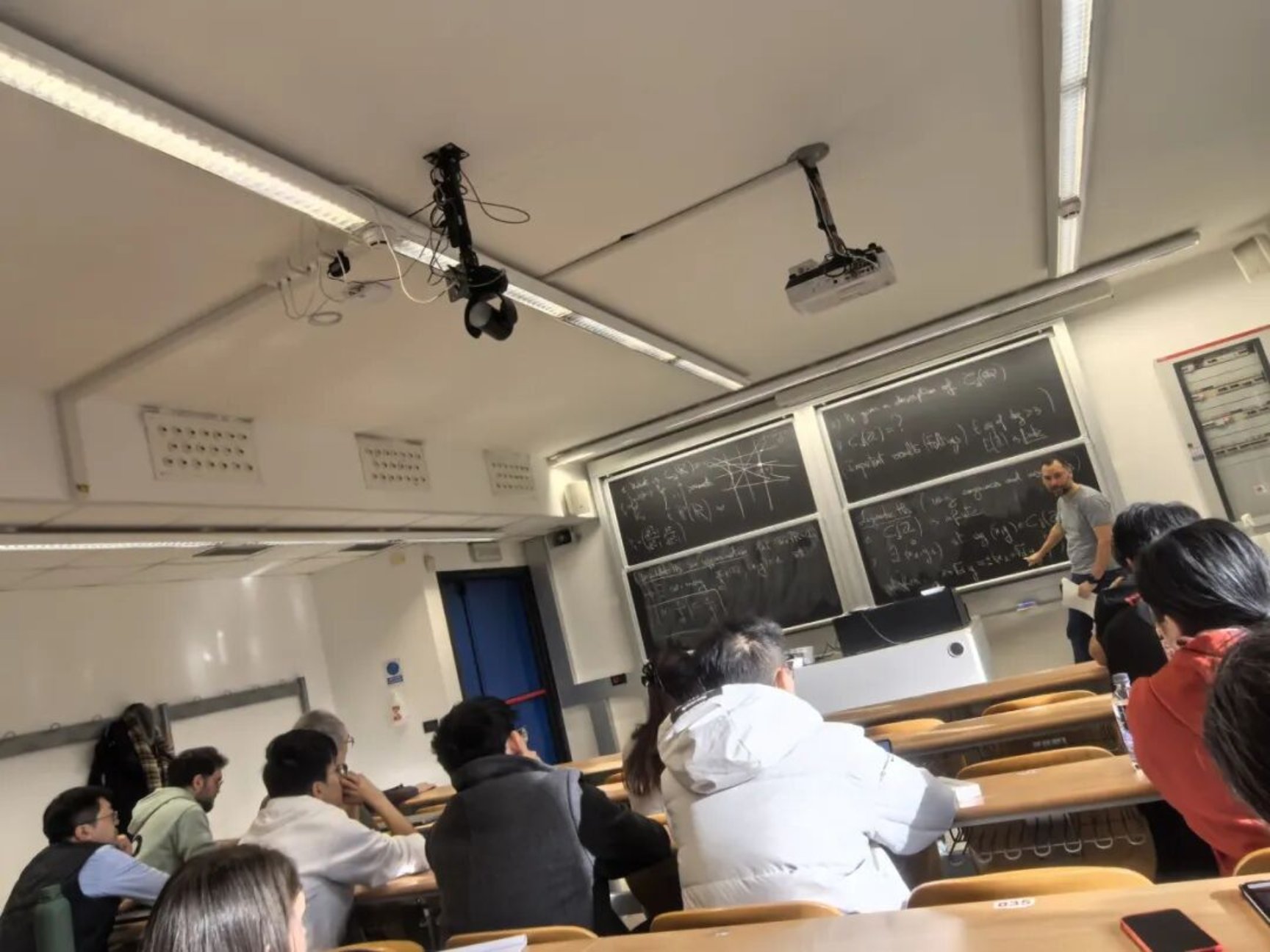
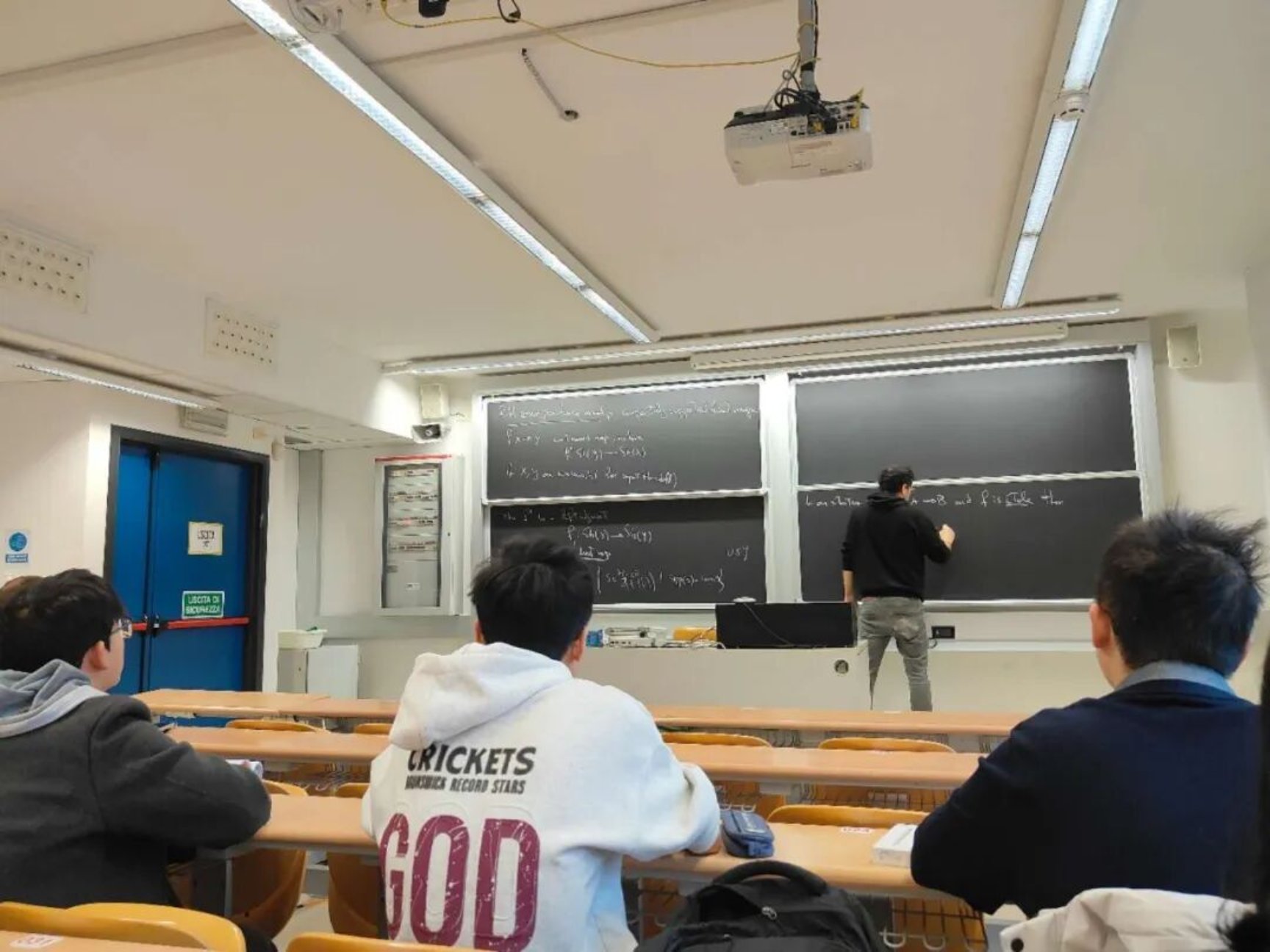
Students attended the program with strong engagement, taking careful notes and raising questions throughout the lectures and discussions. They made full use of opportunities to speak with the presenters, clarifying technical details and exchanging ideas that helped them better understand unfamiliar concepts and refine their own research perspectives. Conversations continued beyond the formal sessions. During coffee breaks and shared meals, students interacted informally with faculty members and peers at Padua, discussing research problems, study approaches, and academic life in different systems. These exchanges created a relaxed but intellectually active atmosphere and offered valuable insight into both mathematical practice and academic culture across institutions.
The openness and collegiality of Padua’s faculty and students left a lasting impression on the visiting group. Despite differences in academic background and cultural context, a shared commitment to mathematical inquiry made communication natural and productive, encouraging the students to approach their own studies with greater confidence and a broader outlook.
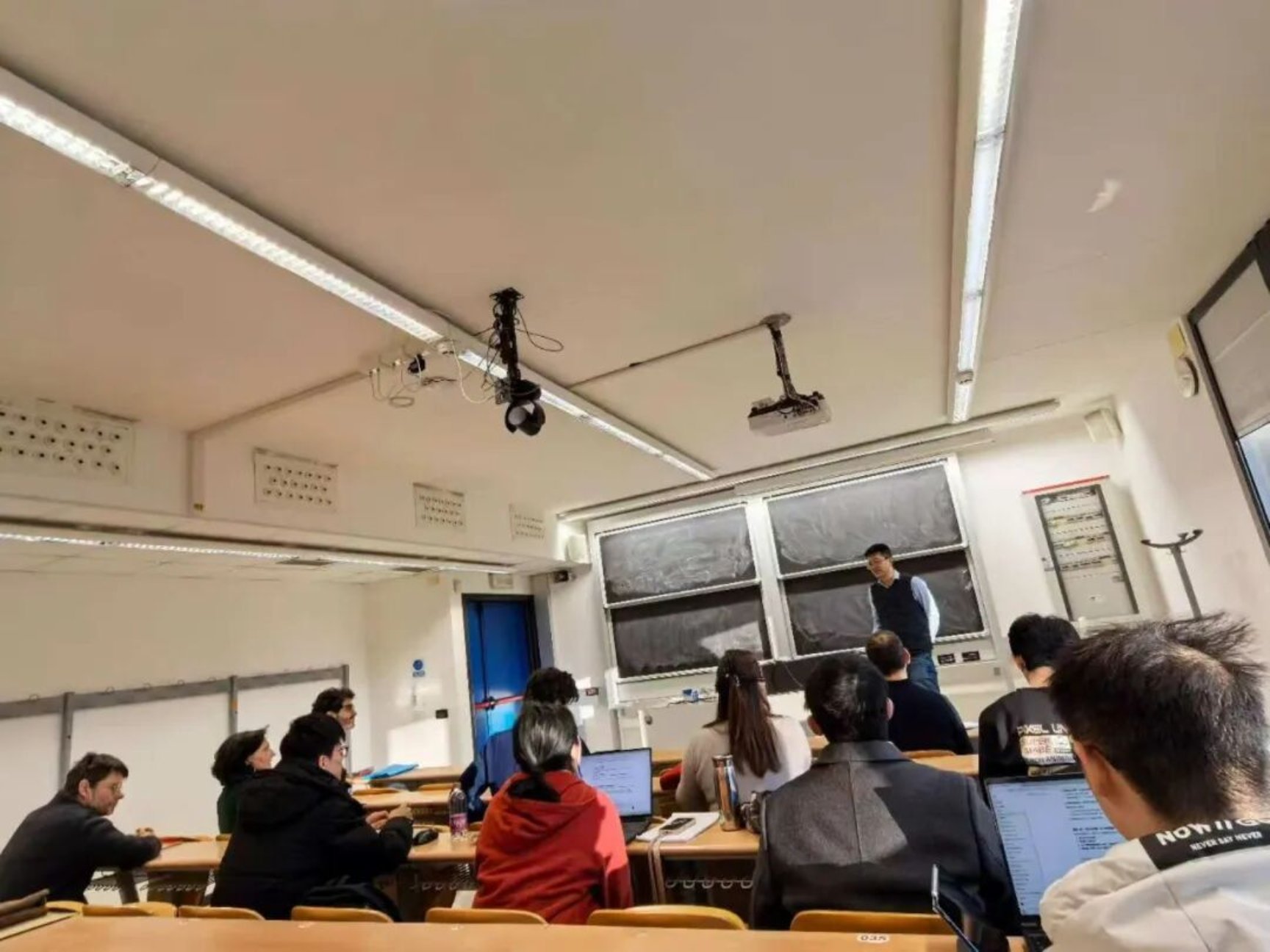
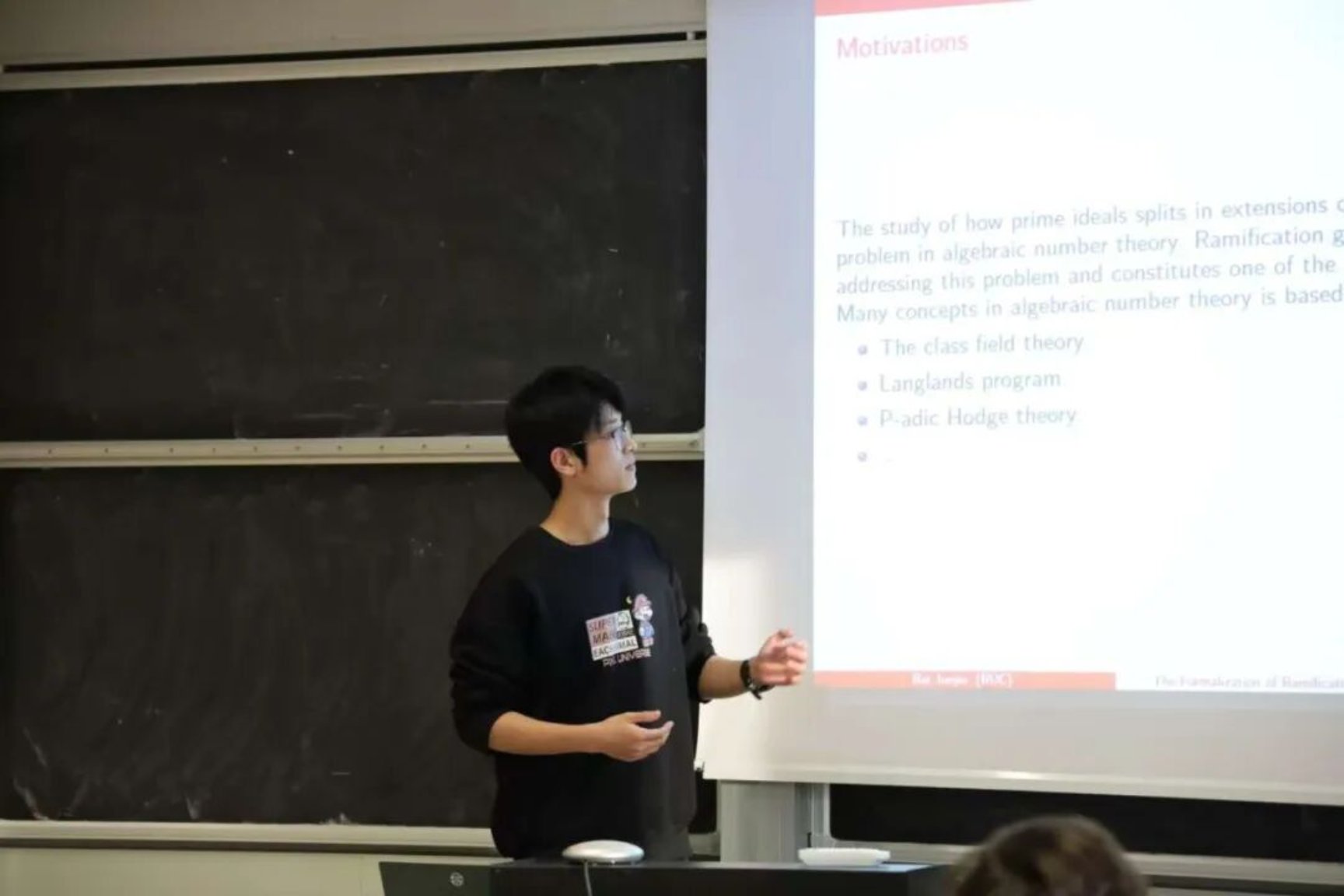
This exchange was not merely a one-way learning experience but a platform for meaningful two-way academic dialogue. During the visit, Associate Dean Wang Shanwen delivered a research lecture titled “p-adic transcendence of Hahn series,” presenting recent findings to faculty and students at Padua. Doctoral student Bai Junjie (Class of 2024) gave a talk titled “Formalization of Ramification Groups,” sharing research ideas and interim progress in mathematical formalization. The discussion sessions that followed were lively and productive, with Padua faculty and students posing targeted questions on theoretical background and technical details. These exchanges fostered mutual inspiration, tested the research outcomes and talent-training effectiveness of the School of Mathematics, and provided valuable direction for future research exploration and the continued development of the “Kuande Mathematics+” program.
The visit to Padua concluded after an intensive two-week program of lectures, discussions, and academic exchange. For the participating students, the experience offered not only exposure to new areas of research but also a clearer sense of how mathematical work is carried out in an international setting. Many noted that the opportunity to interact directly with researchers in Padua broadened their perspective and prompted them to reflect more seriously on their own academic paths. They plan to carry this momentum forward in their future studies by strengthening their theoretical foundations and continuing to develop their research skills.
The “Kuande Mathematics+” visiting initiative has become an important component of the School’s efforts to support internationally oriented mathematical training. Through sustained exchange with leading institutions abroad, the program provides students with opportunities to engage with diverse research communities and academic cultures. The School of Mathematics will continue to build on these partnerships and expand opportunities for international study and collaboration, with the aim of supporting students as they grow into independent researchers with a broad academic outlook and strong disciplinary training.